
Do abortions hurt? Understanding pain levels and finding relief

If you're considering an abortion and wondering about pain, you're asking exactly the right questions. Do abortions hurt? Yes, they can — and that's completely normal. Abortion pain can range from mild cramping to very intense sensations, and wherever you fall on that spectrum, you're not doing it “wrong.” You’re just having your experience.
What matters most is that you feel prepared for what’s coming. When you know what to expect and have the right tools ready, you can move through your abortion with more confidence, even when the pain feels strong.
carafem provides both medication abortion and in-clinic abortion, and carafem clients have access to 24/7 medical support by dialing (855) 729-2272 or texting Cara, our virtual abortion companion.
Pain is normal: your experience is valid
Let’s start with the most important truth: feeling pain during your abortion does not mean something is wrong. Whether your cramping feels like a regular period or the most intense sensation you’ve ever had, your body is doing exactly what it needs to do. The pain you feel is your uterus contracting to empty its contents. It’s a natural, necessary process that shows your body is doing the work.
Some people are surprised by how intense abortion pain can feel. Others find it milder than they expected. Both are completely valid and normal. Your friend might have described their abortion as “just like bad period cramps,” while you might experience something much stronger. Neither of you is doing it wrong. Pain is deeply personal, and your experience is uniquely yours.
Serious complications occur in less than 1% of abortions, so most of the time the pain you’re feeling is part of a normal process and not a sign of complications. It can help to remember that when the sensations feel overwhelming.
Understanding what’s happening in your body
Knowing why you’re experiencing pain can help you feel more in control. During both medication and in-clinic abortions, your uterus needs to contract to empty the pregnancy tissue. Those contractions are what cause the cramping sensations you feel. Think of it like your period happening in a shorter window instead of spread out over several days.
The science behind the sensation
Misoprostol is a prostaglandin analog — meaning it acts like the same hormones that cause period cramps. It tells your uterus to contract, which creates the squeezing, cramping sensation you feel during a medication abortion.
During an in-clinic abortion, the uterus also contracts as it’s being gently emptied. That natural contracting process is what creates the “intense cramp” sensation many people describe.
Common side effects after misoprostol
Along with cramping, it’s very common to have other symptoms after using misoprostol. In large studies, people reported:
Nausea: about 43–66%
Vomiting: about 23–40%
Diarrhea: about 23–35%
Dizziness: about 28–39%
Chills, feeling warm, hot flashes, or shaking: about 32–69%
Headache: up to about 40%
These ranges look big because every body responds a little differently — but all of these are considered expected side effects, not signs that something is going wrong.
You might also have sensations that make everything feel more intense, even though they aren’t directly from the cramps themselves. For example:
Nausea can make everything feel worse.
Diarrhea can add to your discomfort.
Chills and shaking can make you feel vulnerable and amplify how you experience pain.
Knowing that these symptoms are common and usually part of the normal process can make them feel a little less scary — and it can help you prepare ahead of time with the right tools, like nausea medicine, anti-diarrheal medication, and a warm blanket or cozy layers.
What to expect from in-clinic vs. medication abortion pain
With an in-clinic abortion, the most intense sensations usually happen during the procedure itself, which lasts just 2–7 minutes. You’ll feel a quick pinch when your provider numbs your cervix, followed by strong cramping as your uterus contracts while it’s being gently emptied with suction. Many people describe it as feeling like all their period cramps compressed into a few minutes. It can be very intense, but it’s also over quickly.
Some people also feel lightheaded, dizzy, or nauseous during this part. If you’re someone who gets faint during blood draws or medical procedures, that same vasovagal response can happen here, too. It’s a normal reaction when the cervix is dilated or when instruments enter the uterus, and your care team is trained to recognize and support you through it.
Medication abortion with abortion pills now accounts for about 63% of U.S. abortions, and it comes with a different pain pattern. After taking mifepristone (which rarely causes any discomfort), you’ll take misoprostol at home. Cramping typically starts within 30–90 minutes and builds over the next few hours. The most intense cramping usually lasts 2–4 hours, with many people describing waves of pain that peak and ease.
On a scale of 0–10, some people rate their worst moments around 4–5, while others experience 8–9 level pain. Both are normal. The key difference is that with medication abortion, you’re managing this intense phase at home over several hours, while in-clinic care concentrates the intensity into a few minutes with immediate medical support.
Tools to manage your pain: what really works
Here’s what you need to know: pain management tools can significantly help, but they might not erase the pain completely. It isn’t realistic to expect that you will feel nothing. The goal is to have strategies that help you cope with whatever sensations show up.
Let’s talk about what actually helps.
Over-the-counter medications: your first line of defense
One of the biggest keys to managing abortion pain is using the right medications early in the process. Once cramping begins — or even when you feel the first hints of discomfort — start your pain medication. Staying ahead of the pain is almost always easier than trying to catch up once things intensify.
NSAIDs like ibuprofen are considered the gold standard for abortion-related cramping. ACOG specifically recommends NSAIDs as first-line treatment because they directly target the prostaglandins that cause your uterus to contract.
You can also safely combine ibuprofen and acetaminophen — they work in different ways, so taking both can give you more complete relief than either one alone.
A typical regimen might look like:
Ibuprofen 600–800 mg every 6–8 hours
Acetaminophen 650–1000 mg every 4–6 hours (alternating with ibuprofen)
Continue for the first 24–48 hours, even if you feel okay
This combination is safe for most people, but don't use NSAIDs if your clinician has ever told you to avoid them.
If nausea is making everything worse, taking an anti-nausea medication about 30 minutes before using misoprostol can make a huge difference. And if you’re dealing with diarrhea (a very common misoprostol side effect), an over-the-counter option like Imodium can help ease that discomfort.
Sometimes it’s not the cramping itself that feels unmanageable — it’s the misery from the nausea, chills, or diarrhea on top of it. Treating those “side” symptoms can dramatically change how you experience the pain overall.
Heat: simple but powerful
Never underestimate the power of heat. A heating pad or hot water bottle isn’t just comforting — warmth helps relax the uterine muscle and can interrupt pain signals, making cramps feel more manageable. Many people find that lower back heat works even better than direct belly heat, so it’s worth trying both to see what your body responds to.
During the most intense cramping, you can switch the heat source between your lower abdomen and your back every 20 minutes. If you’re using disposable heat patches, place them over thin clothing to avoid skin irritation — especially if you’ll be using them continuously for a few hours.
Movement and position changes
Even when you feel like curling up in a ball, gentle movement can significantly reduce pain. It can feel counterintuitive when cramping is intense, but options like these may help:
Slow hip circles while sitting on the edge of your bed
Walking to the bathroom and back
Lying on your side with knees drawn up, then switching sides
Child’s pose or cat-cow stretches between cramp waves
Small changes in position and movement can improve blood flow and help your muscles release some tension.
Massage and pressure
During intense cramp waves, you can try uterine massage: place the heel of your hand just below your navel and make small, firm circles for 1–2 minutes while taking long, slow breaths. Some people find counter-pressure on their lower back equally helpful — a support person can press firmly with their palms during the strongest waves.
TENS units: electric relief
A TENS unit (short for transcutaneous electrical nerve stimulation) uses tiny electrical pulses to help interrupt pain signals — basically giving your nervous system something else to pay attention to while your uterus is doing its job. When you place the pads on your lower back or abdomen, many people feel a noticeable drop in cramping intensity, especially during the peak hours of a medication abortion.
Start at a low setting and increase gradually until you find a level that feels helpful but not uncomfortable.
Where to get one:
You can order a TENS unit online or pick one up in most drugstores. They’re usually found near heating pads or muscle relief products, and many options cost between $20–$40. It’s an easy tool to keep on hand — and something you can continue using for period cramps or pelvic pain long after your abortion.
Cannabis and CBD: know your options
If it’s legal where you live — and something you already feel comfortable using — cannabis or CBD can sometimes help with cramping, nausea, or the overall stress of the moment. CBD is non-intoxicating and can offer a calming, steadying effect. THC may help with both pain and mood, though it will cause a noticeable “high,” which not everyone wants while managing abortion symptoms.
If you already use cannabis for period cramps, you may find your body responds in a similar way during a medication abortion.
Two important notes: avoid combining cannabis with prescription sedatives, and make sure you’re following your local laws. If you’re not a regular user, this is also not the time to experiment — start low, go slow, and choose what feels safest for you.
How carafem supports you through every step
You don’t have to manage this experience on your own. At carafem, we know that honest preparation and continuous support can shape your whole abortion experience.
During your in-clinic visit
If you choose in-clinic care, you'll have a dedicated advocate whose entire job is supporting your comfort. They'll explain each step, check in constantly, and offer immediate comfort measures like heating pads, hand-holding, or guided breathing. If you're someone who gets anxious during pelvic exams or medical procedures, tell us. We'll adapt our approach to help you feel as comfortable as possible.
You're welcome to bring a support person if that helps you feel grounded. Our staff are experts at coaching you through the intense moments with simple, effective techniques. When pain peaks during those few minutes of the procedure, we're right there with you, reminding you that you're doing great and it will be over soon.
With Cara: Your abortion companion
When you choose medication abortion through carafem's online service, you get access to Cara, our virtual abortion companion. Cara becomes your round-the-clock companion through the entire process by sending medication reminders, checking in on how you're feeling, and helping you understand what's normal.
Developed by carafem's medical team, Cara can answer hundreds of questions with medically accurate, compassionate responses. Feeling unsure if your pain level is normal? Cara can reassure you. Wondering if that specific sensation means something's wrong? Cara has answers. And if anything requires extra attention, Cara immediately connects you with your care team.
carafem comfort kits
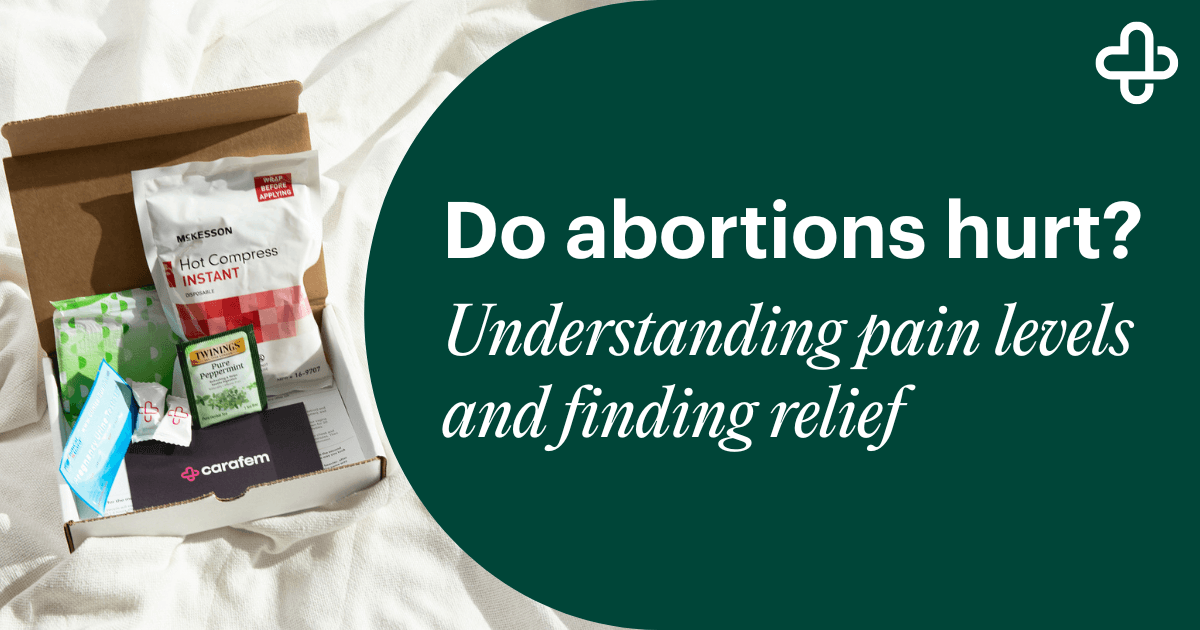
Whether you visit a carafem health center or receive care online, you’ll get our signature abortion comfort kit. It’s one more way we make sure you feel supported during and after your abortion. Everything in the kit is chosen to help ease common symptoms like cramping, bleeding, or nausea, and help you feel cared for.
Inside your comfort kit:
Ibuprofen and acetaminophen – to ease cramping or breast tenderness
Anti-nausea – (odansetron) to help settle your stomach
Instant heat pack – to help relax your abdominal muscles
Pads – so you have one on hand and know what kind to get
Peppermint tea – to ease an upset stomach
Your care team is always here for you. carafem clients have access to 24/7 medical support. You can get in touch by dialing (855) SAY-CARA or texting Cara.
For some people, having an abortion is like having a heavy period; for others, it can be more painful. Both are normal. Please know carafem will support you through the whole process.
When to contact your care team
Trust your instincts. If something feels off or you’re worried, reach out. That’s what your care team is there for. Call carafem right away with questions or concerns, or if you have:
Vomiting less than 30 minutes after taking the mifepristone or while holding the misoprostol in your cheeks
Bleeding that is soaking through 2 maxi pads per hour for more than 2 hours straight
Passing blood clots that are larger than a lemon
Severe pain not helped by pain medications, rest, or heating pads
Severe vomiting or diarrhea that lasts more than 24 hours
A fever of 100.4°F or higher that starts more than 24 hours after taking misoprostol
Symptoms of an allergic reaction (like rash or shortness of breath)
No bleeding or blood clots within 24 hours of using misoprostol
Moving forward: you’ve got this
Let’s return to that initial question: Do abortions hurt? Yes, they can. Sometimes mildly, sometimes intensely. But now you know why that pain happens, what it might feel like, and — most importantly — how to prepare for and manage it.
Your abortion experience is yours alone. Whether you move through it with minimal discomfort or find yourself working through strong sensations, you’re still doing it right. The pain is temporary. Your strength is real. And support is always available.
carafem believes in honest preparation and compassionate support. carafem won’t promise you a pain-free experience, but carafem can promise that you won’t go through it alone. From your first question to your final follow-up, carafem is here to support you with the respect, care, and honesty you deserve.
Your body knows what to do. With the right preparation and support, so do you.
Get the newsletter
Subscribe to our newsletter for reproductive health information and resources.