
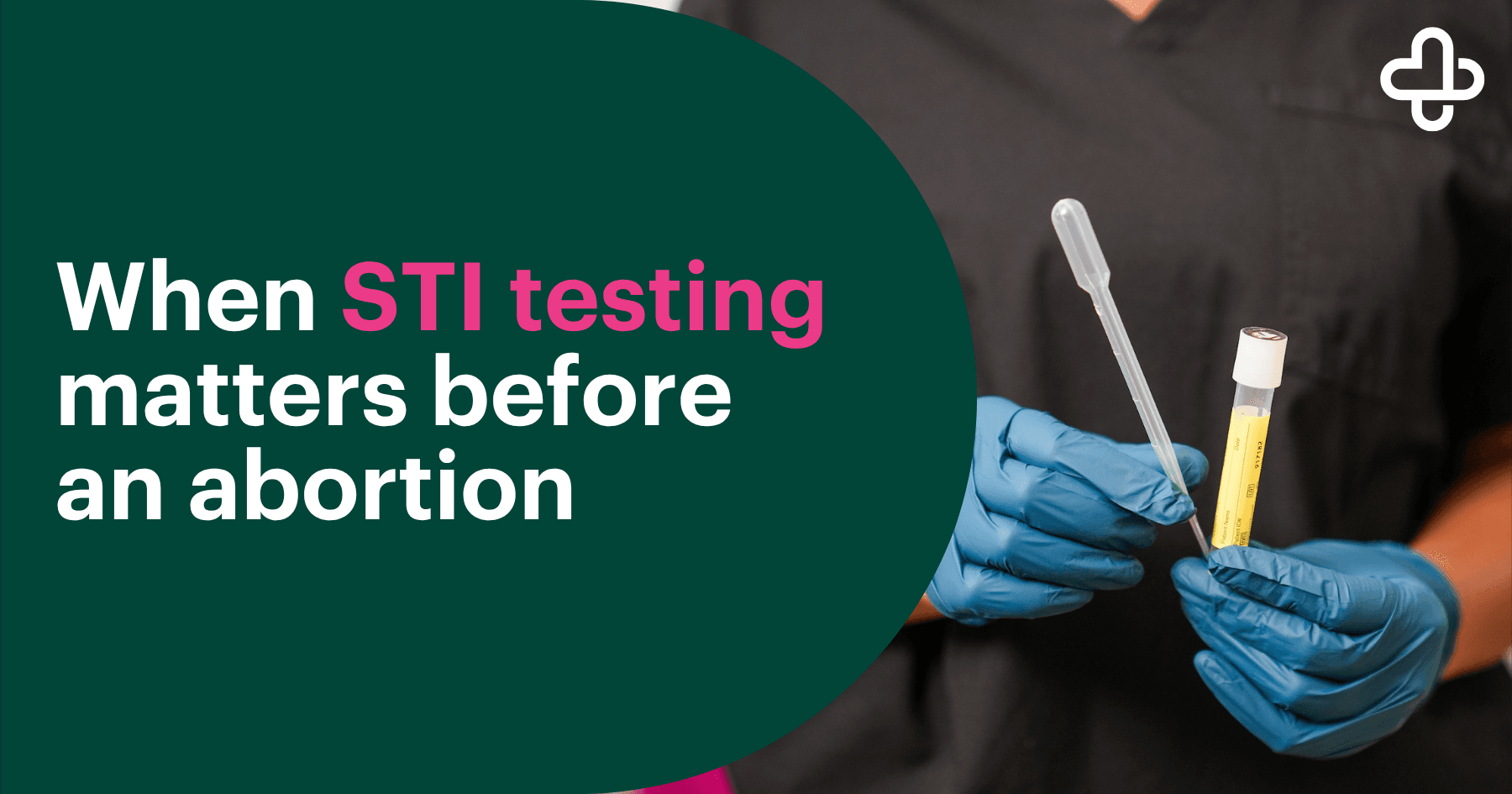
When STI testing matters before an abortion

Many people wonder if any medical preparation is needed before an abortion. In most cases, there’s very little you need to do ahead of time.
STI (sexually transmitted infection) testing can be an important part of protecting your health.
You may want to consider testing if:
You have had a new partner or partners since your last STI test
You have had sex without protection
A partner has recently been treated for an STI
You think you may have been exposed to an STI
You’ve had close sexual contact with a partner whose STI status you don’t know
STI testing is a routine part of preventive health care and is often included in regular check-ups. It can also be an important step before care like an abortion or IUD placement, since untreated infections can increase the risk of complications and make recovery more difficult.
Because infections like chlamydia or gonorrhea often do not cause symptoms, testing helps identify and treat infections early.
In most cases, testing can be done at the same visit. You do not need to do it ahead of time. If you know you have been exposed to an STI, it is important to let your provider know so treatment can be started as soon as possible.
Procedures like abortion or IUD placement are safe, but if an untreated infection is present, it can enter the cervix during care and lead to a more serious infection, such as pelvic inflammatory disease (PID).
The type of abortion you have, abortion pills or an in-clinic procedure, can affect how infections are managed, but the goal is the same. If there is an infection, it is best to find and treat it.
Procedural (in-clinic) abortion: People are usually given antibiotics to help prevent routine infection during the procedure. These antibiotics do not treat an existing STI.
Abortion pills: Antibiotics are not typically used. If you have an STI and have not been tested, it may go untreated unless it is identified and treated separately.
This is not about adding stress. It is about supporting your sexual health.
Is STI testing required before an abortion?
No. STI testing is not required before an abortion.
STIs do not always cause symptoms, like pain when urinating, vaginal discharge, or pelvic pain. It is possible to have one and not know it. Testing is the only way to be sure you don’t have one.
Testing is simple and quick. Most tests use a urine sample or a vaginal swab and can often be done during the same visit. If an infection is found, it can usually be treated right away.
Testing should never delay your abortion care but screening for STIs is still an important part of protecting your health.
What STIs should you get tested for?
The most common STIs to check for are chlamydia and gonorrhea. These infections often have no symptoms and are easy to treat.
Testing is usually done with a urine sample, and results are typically available within 3 to 5 days.
You may also be tested for:
These are checked with a vaginal swab, a small, soft cotton swab placed inside the vagina. It should not be painful, though it may feel slightly uncomfortable.
If you have any concerns or notice any sores, blisters, or lesions, carafem can also test for herpes (HSV) when a lesion is present.
Results are usually available within a few days but can take up to a week. If a test is positive, your provider will contact you and provide treatment options so you can start care right away.
Where can you get STI testing?
You have options when it comes to STI testing. You can go to:
A primary care provider
Urgent care
Community health center
A reproductive health clinic
STI testing — common questions answered
Can you have an STI without having any symptoms?
Yes. Often, STIs do not cause symptoms. Up to 80 percent of people with chlamydia or gonorrhea do not know they have it.
Do you need to get STI testing after an abortion?
No. Your risk of having an STI does not change because of the abortion. However, untreated infections can make recovery more difficult, so testing can still be an important part of your care, especially if you may have had recent exposure or are at ongoing risk.
Can you get STI testing at urgent care?
Some urgent care locations do offer STI testing, but availability, timing, and the types of tests can vary.
For low-cost or free options, local or county health departments are also a great place to look for STI testing.
How long does STI testing take?
Testing is quick. Most tests are done with a urine sample or swab and take just a few minutes.
Results are usually ready within a few days. If you are combining testing with another visit, the full appointment is often under an hour.
How much does STI testing cost?
The cost for STI testing can range from $0 to $200+, depending on your insurance, the type and number of tests, and if you are already visiting carafem for other services, like an abortion or IUD. Please refer to our costs page for the most up-to-date pricing. is quick.
What if I test positive for an STI? Can I still get an abortion?
Yes. You can still have an abortion. Testing does not delay your care.
You can still have an abortion, and treatment can begin as soon as results are available. If you know you have been exposed to an STI, let your provider know. Treatment can often be started sooner.
If I test positive for an STI, do I need to get tested again?
In many cases, yes. Follow-up testing can help make sure the infection has not come back.
Your provider will let you know the right timing, but it is often recommended to repeat testing about 2-3 months after treatment is completed.
Do I need to tell my partner(s) if I test positive?
If you feel comfortable, letting a partner know can help them get tested and treated, too. It helps ensure both partners complete treatment, which reduces the risk of you being re-exposed and prevents them from passing it to others.
If you are not sure how to have that conversation, your provider can help you think through your options. There are also tools that let you notify partners anonymously by text or email, so they can get tested without you having to tell them directly or share your name.



Stay connected with carafem.
Subscribe for honest reproductive health information, carafem updates, and resources worth reading.